
Contoura LASIK
in Sacramento & Roseville
Get Out of Glasses TODAY™
LASIK reshapes your cornea to correct nearsightedness, farsightedness, and astigmatism, permanently and precisely. At California LASIK & Eye in Sacramento, serving Roseville and the surrounding area, we plan most procedures using Contoura® topography-guided technology, which maps more than 22,000 points across your unique corneal surface. Dr. Bradley Barnett, MD, PhD, a Johns Hopkins-trained cornea and refractive surgeon with over 25,900 procedures to his name, personally performs every procedure.
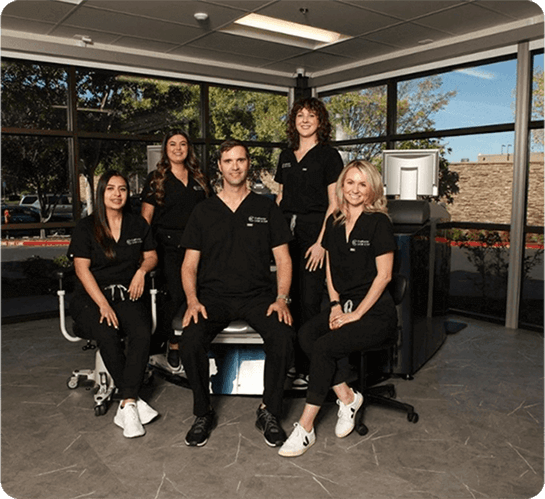
Precision LASIK, Personalized to You
Your cornea does one job: bend light. Everything you see passes through it first, and if its curvature is even slightly off, the image landing on your retina is off too, no matter how healthy the rest of your visual system is. Correcting that curvature at the source, with sub-micron exactness, is the entire logic of laser vision correction. The procedure does not trick the eye or temporarily compensate for its shape. It permanently changes the architecture of the tissue responsible for most of your eye’s focusing power, a structure called the corneal stroma.
Standard LASIK has been performed for more than three decades, during which time it has become one of the most clinically validated elective procedures in medicine, with more than 7,000 peer-reviewed studies and tens of millions of procedures performed worldwide. Large prospective trials and meta-analyses consistently show that more than 90% of patients treated with standard wavefront-optimized LASIK achieve 20/20 or better uncorrected visual acuity. The results are real, and the science is well established.
But a population-averaged corneal model is not your cornea, and at California LASIK & Eye, we do not build a surgical plan around someone else’s anatomy when a map of your own exists.
That is why Contoura topography-guided LASIK is our primary planning platform. Contoura maps more than 22,000 individual points across your corneal surface, well beyond what a standard wavefront profile captures, and uses that map to guide your treatment. Our Ray-Tracing WaveLight Plus platform is also available for select patients.
On This Page:
How LASIK Works
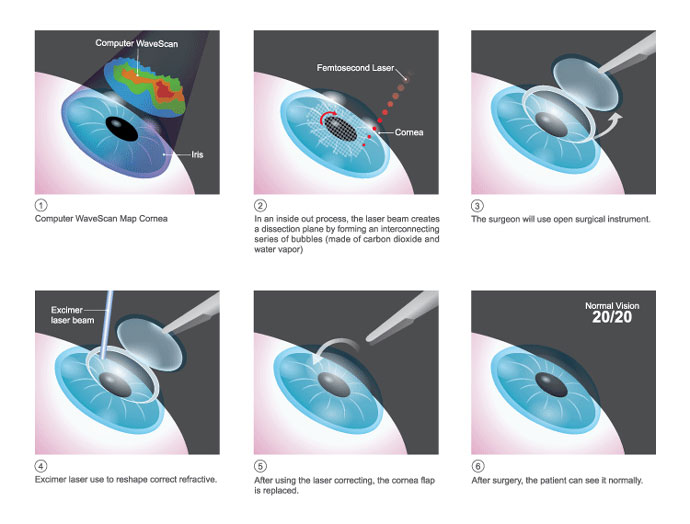
LASIK, which stands for laser-assisted in situ keratomileusis, corrects vision by precisely reshaping the cornea, the clear front surface of the eye, so light focuses accurately on the retina. The procedure takes roughly 10 to 15 minutes per eye, and we typically complete the surgery for both eyes in under 30 minutes. A laser creates a thin corneal flap, a second laser reshapes the underlying tissue based on your individual prescription, and we reposition the flap. No stitches, no patches. Most patients notice clearer vision the same day.
What separates modern LASIK from the procedure performed a decade ago is the level of personalization. Older LASIK treated the eye based on a standard refraction, the same reading your optometrist uses to write a glasses prescription. Today, topography-guided platforms like Contoura map thousands of points across your individual cornea, then use that data to guide the laser with sub-micron precision. The result is not just sharper distance vision, but better quality of vision, including improved contrast, reduced nighttime glare, and crisper detail in low-light conditions.
At California LASIK & Eye, every procedure begins with a comprehensive mapping of your eye’s unique optical system, ensuring the laser plan is built specifically for you, not for an average prescription.
Am I a Candidate?
Most adults between the ages of 21 and 55 with a stable prescription are candidates for LASIK, but the only way to know for certain is a thorough pre-operative evaluation. Candidacy depends on several measurable factors.
Prescription range: LASIK addresses myopia up to approximately -12.00D, hyperopia up to +6.00D, and astigmatism up to 6.00D, though optimal outcomes are most consistent in the moderate ranges.
Corneal thickness: The laser removes tissue to reshape your cornea. Candidates need sufficient corneal thickness to allow for the correction while preserving structural integrity. A measurement called the percent tissue altered, a validated predictor of post-LASIK corneal stability, must remain at or above 60% after treatment to minimize the risk of ectasia.
Corneal shape: Irregular corneal topography, including early keratoconus, can disqualify a candidate from LASIK. In those cases, alternatives like EVO ICL may be appropriate.
Prescription stability: Your prescription should be stable for at least one to two years before LASIK. A changing prescription suggests the eye is still maturing, and operating before stability is reached reduces the longevity of results.
General health: Autoimmune conditions, uncontrolled diabetes, and certain medications can affect healing and may be disqualifying factors.
If you are not a LASIK candidate, that is not the end of the conversation. We offer vision correction alternatives including EVO ICL, an implantable lens for patients with higher prescriptions or thin corneas, and refractive lens exchange for patients seeking a permanent solution that also addresses age-related vision changes, so you leave with the right procedure for your anatomy, not a default recommendation.
Not sure if you qualify? Take Our LASIK Self-Test to find out in minutes.
Contoura: The Technology Behind Your Results
Your outcome depends on the laser platform, the diagnostic mapping, and the surgeon’s experience interpreting the data. Here is what we use at California LASIK & Eye and why it matters.
Contoura Topography-Guided LASIK
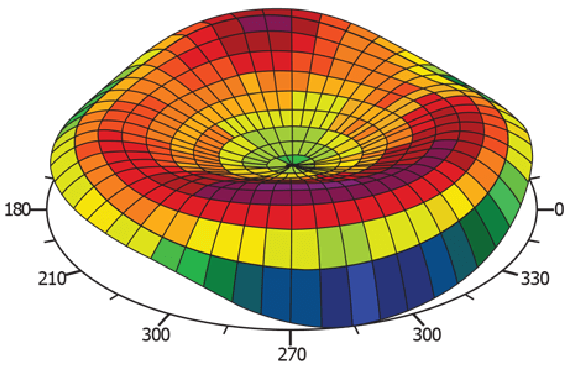
Contoura Vision topography-guided LASIK is our primary platform for LASIK planning at California LASIK & Eye. Contoura maps more than 22,000 individual points across your corneal surface, far beyond what a standard wavefront profile captures. That map becomes the blueprint for your treatment, correcting your prescription along with the surface irregularities standard LASIK profiles average out.
The data supports the approach. In a prospective contralateral eye study comparing topography-guided and wavefront-optimized LASIK, topography-guided treatment induced significantly fewer corneal higher-order aberrations, including coma and trefoil, the subtle distortions that cause glare and reduced night vision. In a separate study of Contoura outcomes planned with the Phorcides algorithm, 90% of eyes achieved 20/20 or better uncorrected visual acuity.
For patients with irregular corneas or meaningful higher-order aberrations on their diagnostic map, Contoura is often the difference between a good result and your best possible result.
WaveLight Plus Ray-Tracing LASIK
For select patients, we also offer WaveLight Plus with Ray-Tracing optimization, a platform that simulates how light travels through your entire optical system to plan treatment. For select patients, we also offer WaveLight Plus Ray-Tracing LASIK, a platform that simulates how light travels through your entire optical system to plan treatment. Dr. Barnett was the first surgeon in California, and among the first 10 in the United States, to offer this technology, currently available with $1,000 off.
Femtosecond Flap Creation
All flaps at California LASIK & Eye are created with a femtosecond laser rather than a mechanical microkeratome blade. Femtosecond flap creation allows for precise, bladeless incisions with customized thickness and diameter. In a comparative study of over 1,300 eyes, femtosecond LASIK patients reported 93.3% satisfaction with their visual outcome.
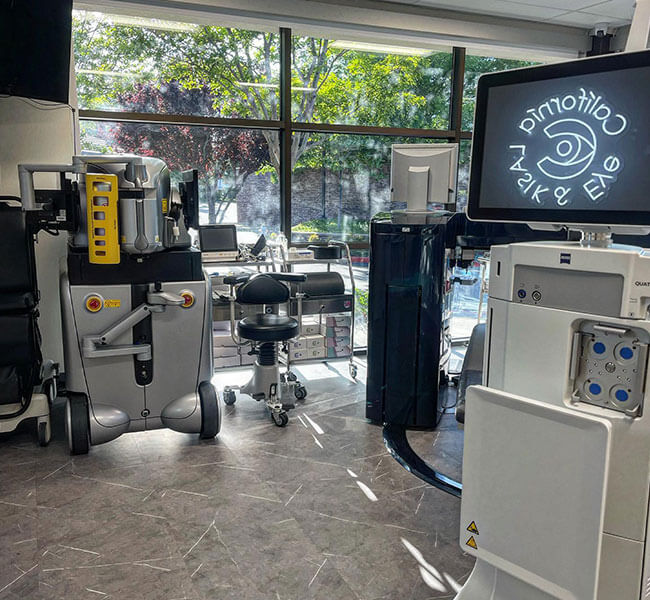
Zeiss OPMI Lumera Surgical Microscope
Dr. Barnett operates under the Zeiss OPMI Lumera, a surgical visualization system that provides enhanced illumination and stereo coaxial observation throughout the procedure, supporting the precision required for sub-micron laser delivery.
What to Expect: Before, During, and After
Before Your Procedure
Your pre-operative appointment includes corneal topography, wavefront analysis, pupil measurement, pachymetry (corneal thickness mapping), and a dilated eye exam. If you wear soft contact lenses, we will ask you to stop wearing them for at least two weeks before this appointment; rigid gas-permeable lenses require a longer contact-free period.
You will receive a detailed pre-op instruction sheet and have the opportunity to ask questions before we confirm your procedure date.
The Day of Your Procedure
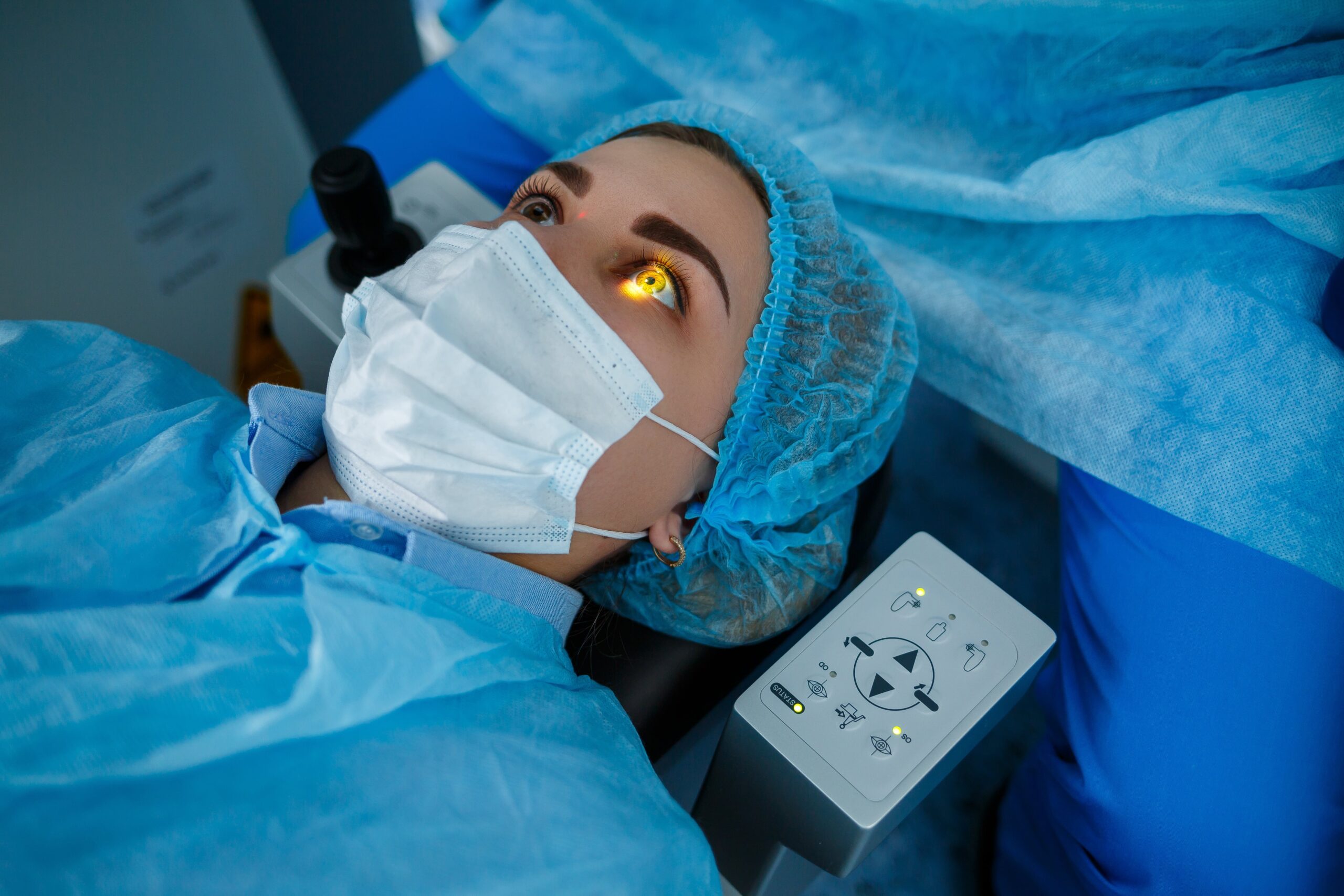
The procedure itself takes approximately 10 to 15 minutes per eye. We will give you a mild sedative to help you relax. Numbing eye drops eliminate discomfort. We will ask you to focus on a blinking light; the laser does the rest. If your eye moves, an eye-tracking system pauses and re-centers the laser automatically.
Most patients describe the experience as uneventful. Most patients find the procedure comfortable and well-tolerated, though you may feel light pressure when we create the flap.

Recovery
Vision improves rapidly. Most patients see clearly within 24 hours, though some fluctuation is normal during the first week. You will use prescription eye drops for several weeks and avoid rubbing your eyes during the initial healing period.
What we call short-term post-LASIK dry eye, Dr. Barnett has termed Surgical Temporary Ocular Discomfort Syndrome, or STODS, in his peer-reviewed research. A large retrospective study of 778 patients found that approximately 41% of patients experienced STODS symptoms at the two-month mark after refractive corneal surgery, with symptoms typically resolving over the following months. We address STODS proactively with pre-operative assessment and, when indicated, IPL (intense pulsed light) therapy to optimize the ocular surface before and after surgery.
You will have follow-up appointments at one day, one week, one month, and three months post-procedure.
Safety and Real-World Results
LASIK is one of the most extensively studied elective surgeries in medicine. Here is what the evidence actually shows.
- 94% of eyes within ±1.00D of target
- 99.2% LASIK success rate (20/20 or better)
- 98.7% patient satisfaction rate
- 0.2% complication rate — well below <1% benchmark
Predictability: A meta-analysis of LASIK outcomes found that 94% of eyes achieved a final refraction within ±1.00D of target, 80% within ±0.50D, and 95% showed refractive stability by six months.
Patient satisfaction: In a three-year longitudinal survey, LASIK patients reported significantly higher visual satisfaction than matched contact lens wearers across multiple quality-of-life measures.
LASIK vs. alternatives: For patients who are candidates for multiple procedures, a 2026 network meta-analysis comparing LASIK, SMILE, and TransPRK found no statistically significant differences, with LASIK showing safety advantages in certain subgroups.
California LASIK & Eye outcomes: Our team has performed over 25,900 vision correction procedures, with a 99.2% LASIK success rate (20/20 or better), a 98.7% patient satisfaction rate, and a 0.2% complication rate, well below the published literature benchmark of less than 1%.
Patient Success Stories and Testimonials
Verified Patient Reviews:
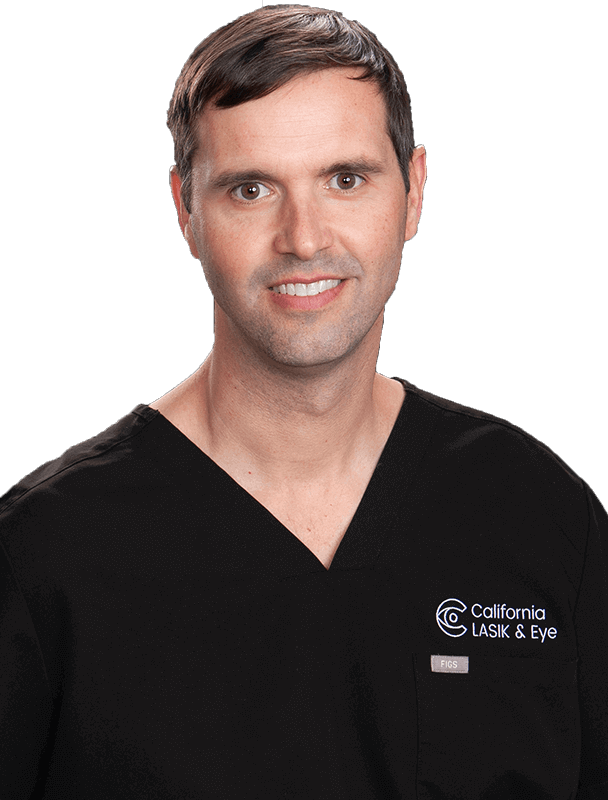
Meet Dr. Bradley Barnett, and Why Choose California LASIK & Eye
Bradley Barnett, MD, PhD, Founder and Medical Director
Dr. Bradley Barnett is the founder and medical director of California LASIK & Eye and one of the most experienced refractive surgeons in Northern California. He earned both an MD and a PhD in Pharmacology from Johns Hopkins University School of Medicine, where he also completed his ophthalmology residency at the Wilmer Eye Institute, one of the top-ranked eye programs in the United States. He subsequently completed a cornea and refractive surgery fellowship at the University of California, San Diego Shiley Eye Institute. Following his fellowship, Dr. Barnett served as Assistant Professor in the Cornea and Refractive Surgery Division at Duke University (2019–2020) and as Medical Director of NVISION Eye Centers (2020–2021) before founding California LASIK & Eye. He was the first surgeon in California and among the first 10 in the United States to offer WaveLight Plus Ray-Tracing LASIK, a distinction that reflects both his early access to emerging platforms and his commitment to offering patients the most precise technology available.
Dr. Barnett is a member of the American Academy of Ophthalmology (AAO), the American Society of Cataract and Refractive Surgery (ASCRS), the Cornea Society, and the Refractive Surgery Alliance. Dr. Barnett is a published researcher with 38 peer-reviewed publications. His work has appeared in journals including Nature Medicine, Science, and Translational Vision Science & Technology, with research covering ocular surface disease and postoperative refractive care.
Dr. Barnett has personally performed over 25,900 vision correction procedures, and the official ICL Doctor Finder verifies him as the highest-volume EVO ICL surgeon in the Greater Sacramento region. His outcomes include a 99.2% LASIK success rate (20/20 or better) and a 98.7% patient satisfaction rate, with a complication rate of 0.2%, well below the published benchmark. He was an early adopter of topography-guided and Ray-Tracing LASIK platforms and was among the first surgeons in Northern California to offer Contoura Vision and WaveLight Plus Ray-Tracing technology.
Dr. Barnett personally evaluates and treats every patient at California LASIK & Eye. He personally performs every consultation and every procedure, the same surgeon, every step. Whether you visit us in Sacramento or travel from Roseville, your care begins and ends with the same physician.
Beyond LASIK, California LASIK & Eye offers the full spectrum of advanced vision correction, including EVO ICL for patients who are not LASIK candidates, RxSight Light Adjustable Lens for patients addressing both distance and reading vision, and CTAK corneal inlay for presbyopia correction.
To learn more about Dr. Barnett's background, training, and approach to patient care, visit Dr. Barnett's full physician bio.
Frequently Asked Questions
No. Numbing eye drops are applied before the procedure, and most patients report feeling only mild pressure, not pain, during flap creation. Some patients describe a brief sensation of warmth or an unusual smell from the laser, both of which are normal. Post-procedure, you may experience a gritty or watery sensation for a few hours, which typically resolves by the following morning.
For most patients, LASIK results are permanent. The corneal reshaping is stable. However, age-related changes like presbyopia, the gradual loss of near-focus flexibility, will continue to develop after your 40s regardless of LASIK. Some patients also experience minor prescription changes over the years. If needed, an enhancement procedure can address residual or new refractive error.
Mild to moderate dry eye does not automatically disqualify you from LASIK, but it does need to be addressed before surgery. Dr. Barnett evaluates every patient's ocular surface health as part of the pre-operative workup. Patients with a history of dry eye, or those prone to STODS after refractive surgery, may benefit from pre-treatment with IPL therapy or other interventions. Untreated dry eye before surgery is one of the most common causes of suboptimal LASIK outcomes.
Not every LASIK candidacy evaluation is equal. Candidacy depends heavily on the diagnostic tools used and the surgeon's experience interpreting those results. If you've been told LASIK is not appropriate for your eyes, we encourage you to schedule a consultation at California LASIK & Eye. In some cases, a different approach, such as Contoura topography-guided LASIK, EVO ICL, or another procedure, may be appropriate. If you are truly not a candidate for any procedure, we will tell you that clearly and explain why.
Standard LASIK corrects your prescription using a wavefront-optimized profile, which works well for most patients. Contoura topography-guided LASIK goes further, mapping more than 22,000 points across your individual corneal surface to design a custom correction. The result is often sharper vision quality, not just sharper acuity, including better contrast and less nighttime glare. For patients who are candidates, we also offer WaveLight Plus with Ray-Tracing optimization. Dr. Barnett will recommend the most appropriate platform based on your specific diagnostic data.
LASIK at California LASIK & Eye starts at $2,750 per eye. All-inclusive pricing covers your pre-operative evaluation, the procedure, and post-operative care for the first year.
Every treatment plan is personalized. Your exact cost depends on your prescription, corneal thickness, and the technology that is most appropriate for your eyes. During your consultation, Dr. Barnett will determine whether LASIK, PRK, or EVO ICL is the right fit and provide clear pricing before you commit.
Financing is available through Alphaeon Credit, including 0% interest options for qualified patients and extended low-payment plans. We accept HSA and FSA funds, as well as most major vision insurance discounts. Our team will walk you through your coverage options at your visit.
Current offer: Light the Beam! $1,000 OFF WaveLight Plus Ray-Trace Guided LASIK. Cannot be combined with other offers.
Schedule Your LASIK Consultation in Sacramento & Roseville
If you have been thinking about LASIK and want to know whether you are a candidate, the next step is a consultation with Dr. Barnett. California LASIK & Eye serves patients from Sacramento, Roseville, Folsom, and the surrounding Northern California communities, including Davis and Elk Grove.
During your consultation, Dr. Barnett will perform a comprehensive eye analysis, review your prescription history, evaluate your corneal health, and walk you through every procedure option, including LASIK, EVO ICL, and others, so you can make a fully informed decision.
We require a $100 deposit at booking and apply it toward your procedure if you move forward.
Get Out of Glasses TODAY™
Want to know if LASIK is right for you? Take Our LASIK Self-Test
Source Index
- Dupps WJ Jr. LASIK outcomes: How are we doing and can we do better? J Cataract Refract Surg. 2016. 27531283. https://pubmed.ncbi.nlm.nih.gov/27531283/
- Santhiago MR, et al. “Percent Tissue Altered and Corneal Ectasia.” Ophthalmology. 2019. https://linkinghub.elsevier.com/retrieve/pii/S0161642018324813
- Topography-Guided vs. Wavefront-Optimized LASIK, Contralateral Eye Study. Journal of Cataract and Refractive Surgery. 2019. https://journals.lww.com/02158034-201907000-00012
- Phorcides-Planned Contoura LASIK Outcomes. Journal of Cataract and Refractive Surgery. 2021. https://journals.lww.com/10.1097/j.jcrs.0000000000000910
- Dry Eye Incidence After Refractive Corneal Surgery, 778-Patient Cohort. Contact Lens and Anterior Eye. 2026. https://linkinghub.elsevier.com/retrieve/pii/S1572100026000219
- LASIK Outcomes Meta-Analysis, 28 Studies, 15,861 Eyes. INPLASY Systematic Review. 2023. https://inplasy.com/inplasy-2023-5-0005/
- Femtosecond vs. Microkeratome LASIK Satisfaction Comparison, 1,366 Eyes. Clinical Ophthalmology. Dovepress. https://www.dovepress.com/comparison-of-visual-acuity-refractive-outcomes-and-satisfaction-betwe-peer-reviewed-article-OPTH
- Price MO, et al. Three-Year LASIK vs. Contact Lens Satisfaction Survey. Ophthalmology. 2016. https://linkinghub.elsevier.com/retrieve/pii/S0161642016300963
- TransPRK vs. LASIK vs. SMILE Network Meta-Analysis. European Journal of Ophthalmology. 2026. https://journals.sagepub.com/doi/10.1177/11206721261425379
Contact Us to Start your eye restoration journey Today!
"*" indicates required fields
