EVO ICL™ Surgery
Achieve Crystal-Clear Vision Without Glasses or Contact Lenses
If you’ve been told you’re not a candidate for LASIK, or if you’re concerned about dry eyes after surgery, the EVO ICL (Implantable Collamer™ Lens) offers a transformative alternative. At California LASIK & Eye, we serve patients throughout Sacramento, Roseville, and Folsom with advanced vision correction solutions tailored to your unique eye anatomy. The EVO ICL is a FDA-approved, removable lens implant that corrects nearsightedness and astigmatism while preserving your natural cornea and maintaining exceptional visual quality.
Unlike LASIK and PRK, which reshape your cornea permanently, the EVO ICL works by placing a biocompatible lens inside your eye, behind the iris. This innovative approach makes it ideal for patients with thin corneas, high prescriptions, or a history of dry eye syndrome. With over 3 million lenses implanted worldwide and a 99% patient satisfaction rate, the EVO ICL represents a proven, reversible path to visual freedom.

What Is EVO ICL?
Understanding Implantable Collamer Lens Technology
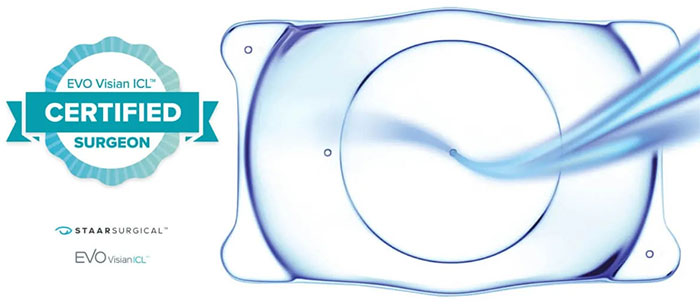
The EVO ICL is a prescription lens made from Collamer, a biocompatible material that has been safely used in eye surgery for over 25 years. Unlike traditional contact lenses that sit on the surface of your eye, the EVO ICL is surgically implanted inside your eye, positioned just in front of your natural lens and behind your iris. This placement keeps the lens invisible to others and protected from external damage.
The EVO ICL corrects refractive errors by bending light rays as they enter your eye, allowing them to focus precisely on the retina. The lens is custom-made for your specific prescription, which can range from -3.00 to -20.00 diopters for nearsightedness, with up to 4.00 diopters of astigmatism correction. This wide range of correction makes the EVO ICL suitable for patients with prescriptions too high or too low for LASIK.
Why Does Collamer Material Matter?
Collamer is a unique material that combines the best properties of silicone and acrylic. It’s:
- Biocompatible, meaning your eye naturally accepts it without rejection
- Hydrophilic, allowing it to maintain moisture and reduce inflammation
- Durable, with no need for replacement unless your prescription changes significantly
- UV-protective, filtering harmful ultraviolet rays before they reach your retina
The material has been extensively studied and proven safe in clinical trials and real-world use across millions of implants globally.
How Do We Evaluate Your Eyes for the EVO ICL?
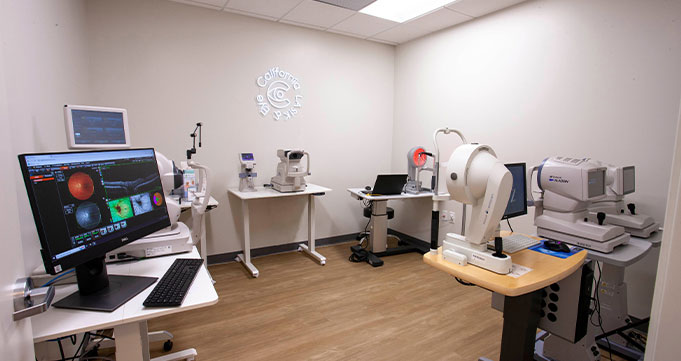
EVO ICL patients tend to research carefully before committing to surgery. Here is the technology Dr. Barnett uses to evaluate your eyes and confirm your ideal lens.
Anterior Segment OCT
Anterior segment OCT gives us a detailed cross-section image of your eye. It shows us how your cornea, iris, and natural lens relate to one another. We use this to select and position your ICL precisely, then to monitor your eye after surgery.
Corneal Topography and Tomography
Corneal topography and tomography map the exact shape and curvature of your cornea. This confirms your eye is healthy and helps us fine-tune your lens calculations for the clearest possible vision.
How Do Ray Tracing and Ray Trace LASIK Help?
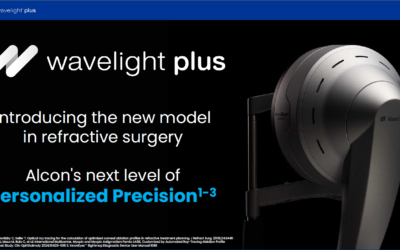
Ray tracing lets us model exactly how light travels through your eye, including through an implanted ICL. Dr. Barnett was first in California and among the first 10 in the US to offer WaveLight Plus Ray Trace LASIK, and he can use this same technology to perform Ray Trace LASIK on top of an existing EVO ICL.
We combine Ray Trace LASIK with EVO ICL for two reasons. First, some patients have astigmatism greater than 4.00 diopters or a prescription beyond what an ICL alone can correct. Ray Trace LASIK closes that gap and helps you reach your full prescription. Second, if your vision is not perfectly clear once your ICL heals, we bundle a Ray Trace LASIK touch-up at no additional cost. Our goal is your best possible vision, not just an approved result.
B-Scan Ultrasound
B-scan ultrasound uses sound waves to evaluate the inside of your eye. We have B-scan technology on-site at California LASIK & Eye and use it whenever your evaluation calls for extra precision in lens selection, or to monitor your eye’s health over time.
What Are the Benefits of EVO ICL Surgery?
1. Visual Clarity and Quality
The EVO ICL provides exceptional optical quality. Many patients report that their vision is sharper and clearer than it was with glasses or contact lenses, with enhanced contrast sensitivity and reduced glare, especially in low-light conditions.
2. Lower Risk of Post-Surgical Dry Eye
One of the most significant advantages of the EVO ICL is that it has far less impact on dry eye than laser vision correction. Because the EVO ICL does not remove corneal tissue or cut corneal nerves, your tear film is largely preserved, though dry eye can still occur.
3. Ideal for High Prescriptions and Thin Corneas
Patients with prescriptions beyond the range treatable by LASIK, or those with corneas too thin for safe laser ablation, are excellent candidates for the EVO ICL. The procedure does not remove any corneal tissue, making it a leading option for many patients who would otherwise remain dependent on glasses or contact lenses.
4. Reversible and Adjustable
The EVO ICL can be removed or replaced if your vision changes over time, such as during natural age-related presbyopia. This reversibility provides peace of mind and flexibility that permanent procedures cannot offer. If your prescription shifts significantly, your lens can be exchanged for a new one with an updated prescription.
5. Quick Recovery and Minimal Downtime
Most patients experience improved vision within 24-48 hours of surgery. Full visual stabilization typically occurs within 1-3 months. You can return to light activities within a few days and resume normal exercise and work within 1-2 weeks, making the EVO ICL an attractive option for busy professionals in Sacramento, Roseville, and Folsom.
6. UV Protection
The EVO ICL blocks UVA and UVB rays, providing built-in protection against harmful solar radiation. This reduces your long-term risk of cataracts and other UV-related eye conditions.
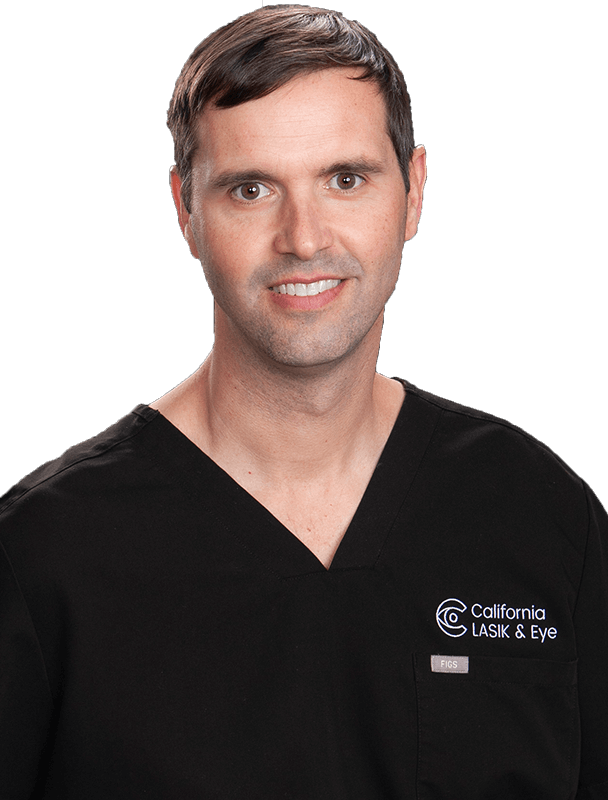
Dr. Barnett Answers Common ICL Surgery Questions
How Does the EVO ICL Procedure Work?
The Science Behind Vision Correction
Your eye focuses light through the cornea and natural lens onto the retina at the back of your eye. With myopia, or nearsightedness, light focuses in front of the retina instead of on it. Astigmatism scatters that focus further, because the cornea or lens is shaped irregularly. The EVO ICL sits inside your eye and redirects incoming light rays. It helps them focus more precisely on your retina, correcting nearsightedness and astigmatism.
Step-by-Step Procedure Overview
Before Your Procedure
Your journey begins with a comprehensive pre-operative evaluation. During this consultation, we perform advanced imaging to measure your anterior chamber depth, corneal thickness, and angle measurements. These precise measurements ensure your lens is positioned safely and optimally. We also discuss your lifestyle, visual goals, and any concerns about the procedure. You’ll receive detailed pre-operative instructions, including which medications to avoid and when to stop eating and drinking before surgery.
During the Procedure
The EVO ICL procedure is performed as an outpatient surgery and typically takes 15-20 minutes per eye. Here’s what to expect:
- Numbing eye drops are applied to ensure your comfort throughout the procedure.
- A small, self-sealing incision (approximately 3.2 millimeters) is created at the edge of your cornea.
- The EVO ICL is carefully inserted through this tiny opening using a specialized injector.
- Once inside your eye, the lens unfolds and is positioned behind your iris and in front of your natural lens.
- The incision is so small that it typically requires no stitches and seals naturally.
Throughout the procedure, you’ll remain awake but relaxed, and you won’t feel pain, only mild pressure. Dr. Bradley Barnett uses advanced surgical techniques and state-of-the-art equipment to ensure precision and safety.
Immediately After Surgery
You’ll spend 30-60 minutes in our recovery area as the numbing drops wear off. Your vision will be blurry initially, which is completely normal. You must arrange for someone to drive you home, as you won’t be able to drive safely on the day of surgery. We’ll provide you with antibiotic and anti-inflammatory eye drops to use as directed.
What Can You Expect During EVO ICL Recovery?
Immediate Post-Op (First 24 Hours):
Your eyes may feel slightly scratchy or irritated, similar to having a grain of sand in your eye. This sensation typically resolves within a few hours. You may experience mild light sensitivity and some blurriness. Avoid rubbing your eyes, swimming, and strenuous activities. Use prescribed eye drops regularly to keep your eyes lubricated and prevent infection.
First Week:
Most patients notice significant vision improvement within 24-48 hours. By the end of the first week, many achieve 20/20 vision or better. You can resume light activities like reading, computer work, and walking. Avoid heavy lifting, contact sports, and swimming. Continue using prescribed eye drops and attend your scheduled follow-up appointments.
First Month:
Your vision continues to stabilize and refine. By the end of the first month, the vast majority of patients achieve their final visual outcome. You can resume most normal activities, including exercise and sports, though we recommend waiting until your eye has fully healed before returning to contact sports. Continue using eye drops as directed.
Long-Term (3+ Months):
Your vision remains stable and clear. The EVO ICL requires no maintenance or replacement unless your prescription changes significantly. Regular eye exams with your optometrist or ophthalmologist are recommended annually to monitor your eye health and ensure the lens remains properly positioned.
How Does the EVO ICL Compare to LASIK and PRK?
| Feature | EVO ICL | LASIK | PRK |
|---|---|---|---|
| Corneal Tissue Removed | No | Yes (up to 150 microns) | Yes (50-100 microns) |
| Suitable for Thin Corneas | Yes | No | Often suitable |
| High Prescription Range | -3 to -20 D | -1 to -12 D | -1 to -10 D |
| Post-Op Dry Eye Risk (STODs) | Minimal | 20-50% | 10-30% |
| Recovery Time | 1-2 weeks | 1-2 weeks | 3-4 weeks |
| Reversible | Yes | No | No |
| Cost | $5,000 per eye | $2,000-3,000 per eye | $2,000-3,000 per eye |
| Long-Term Stability | Excellent | Excellent | Excellent |
When to Choose EVO ICL:
You have thin corneas, high prescriptions, dry eyes, or want a reversible option.
When to Choose LASIK:
You have moderate prescriptions, normal corneal thickness, and prefer the fastest recovery.
When to Choose PRK:
You have thin corneas but cannot undergo ICL surgery due to anterior chamber depth limitations.
Who Is a Good Candidate for EVO ICL?
Ideal Candidates Have:
- Nearsightedness (myopia) ranging from -3.00 to -20.00 diopters, or astigmatism up to 4.00 diopters
- Stable vision for at least 12 months (prescription hasn’t changed significantly)
- Corneas that are too thin for LASIK or PRK
- A history of dry eye syndrome or concerns about post-surgical dry eye
- Age between 21 and 60 years old
- Healthy eyes free from conditions like keratoconus, severe cataracts, or retinal disease
- Realistic expectations about vision outcomes and the recovery process
EVO ICL May Be Right For You If
- You’ve been told you’re not a candidate for LASIK
- You want to maintain the option to reverse or adjust your vision correction in the future
- You’re seeking the clearest possible vision without corneal reshaping
- You work in a dry environment or spend significant time outdoors in the Sacramento, Roseville, or Folsom area
- You’re an athlete or have an active lifestyle and want durable vision correction
Who May NOT Be a Candidate:
- Patients with anterior chamber depth less than 3.0 millimeters
- Those with narrow angles or angle-closure glaucoma
- Patients with active eye infections or inflammation
- Individuals with certain retinal conditions or severe myopia beyond -20 diopters
- Pregnant or nursing women (surgery is typically postponed)
- Patients with unrealistic expectations or psychological concerns about having a lens implant
During your consultation, we’ll perform advanced imaging and testing to determine your candidacy and discuss alternative options if the EVO ICL isn’t suitable for you.
What Are the Risks and Complications of the EVO ICL?
Like any surgical procedure, the EVO ICL carries some risks, though serious complications are rare.
Common Side Effects (Usually Temporary):
- Mild light sensitivity or glare, especially at night (typically resolves within 3-6 months)
- Dry eye sensation (usually manageable with lubricating drops)
- Slight halos around lights in low-light conditions (generally improves over time)
- Mild eye irritation or scratchiness (resolves within days)
Less Common Complications (Rare)
- Lens malposition, requiring repositioning surgery
- Cataract formation, though this is extremely rare with modern EVO ICL technology
- Increased intraocular pressure, managed with eye drops or additional procedures
- Infection, prevented through sterile surgical technique and post-operative antibiotics
- Retinal detachment (extremely rare, occurring in approximately 0.05% of cases)
How We Minimize Risks:
- Comprehensive pre-operative screening to identify and exclude high-risk patients
- Advanced imaging to ensure precise lens sizing and positioning
- Meticulous surgical technique using state-of-the-art equipment
- Strict sterile protocols to prevent infection
- Detailed post-operative care instructions and close follow-up monitoring
- Immediate attention to any concerns or complications

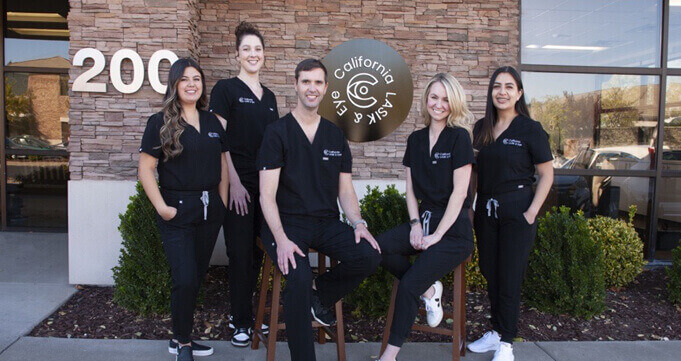
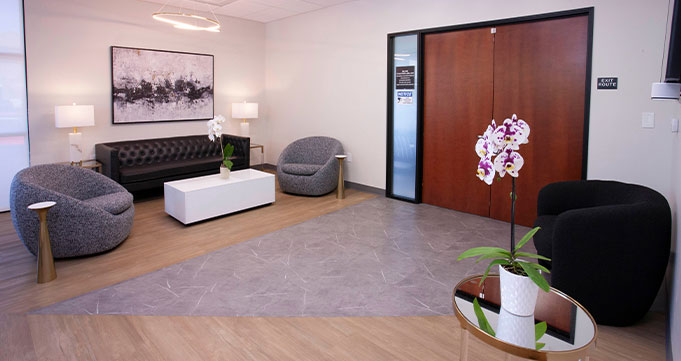
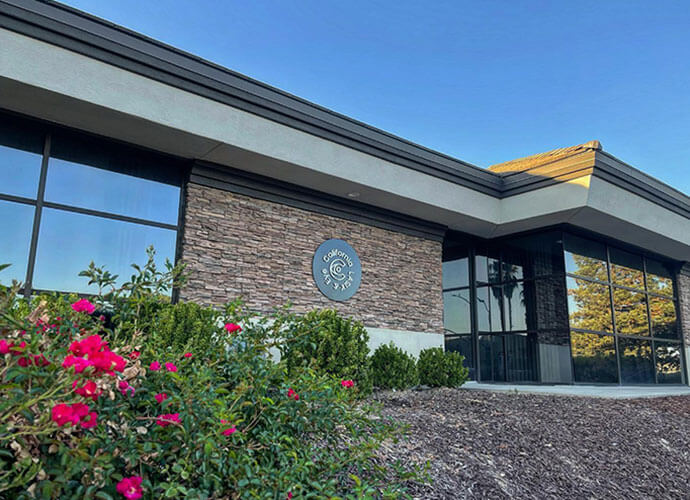
Why Choose California LASIK & Eye for Your EVO ICL Surgery?


Frequently Asked Questions About EVO ICL
How long does the EVO ICL last?
The EVO ICL is designed to be permanent, though it can be removed or replaced if needed. There is no expiration date, and the lens does not require maintenance or replacement unless your prescription changes significantly or you develop a complication requiring removal.
Will I feel the lens in my eye?
No. Once your eye heals, you won’t feel the lens at all. It’s positioned behind your iris, where it’s invisible and doesn’t interfere with normal eye function or sensation.
Can I have the EVO ICL removed if I change my mind?
Yes. The EVO ICL can be removed surgically if you decide you want a different vision correction method or if complications arise. Removal is a straightforward procedure, though it’s rarely necessary.
Where can I find EVO ICL surgery near me?
California LASIK & Eye offers EVO ICL surgery to patients in Sacramento, Roseville, Folsom, and Davis. Dr. Bradley Barnett and his team have performed hundreds of successful EVO ICL procedures for patients throughout Northern California. We’re committed to providing personalized, compassionate care and exceptional vision outcomes. Schedule your consultation today to see if EVO ICL is right for you.
How soon after surgery can I return to work?
Most patients can return to light desk work within 3-5 days. If your job involves physical labor, heavy lifting, or exposure to dust or chemicals, you may need to wait 1-2 weeks. We’ll provide specific guidance based on your occupation and healing progress.
Will my vision continue to change after EVO ICL surgery?
Your vision should remain stable after EVO ICL surgery. However, natural age-related changes like presbyopia (difficulty focusing on near objects) may occur as you age, just as they would without the procedure. These changes can be addressed with reading glasses or other vision correction methods.
Take Your First Step Toward Visual Freedom
The EVO ICL has transformed the lives of millions of patients worldwide, offering clear vision without compromising corneal health and with a lower risk of post-surgical dry eye. If you’ve been told you’re not a candidate for LASIK, or if you’re seeking a reversible, high-quality vision correction option, the EVO ICL may be right for you.
Dr. Bradley Barnett and the team at California LASIK & Eye are ready to help you achieve the clear vision you deserve. We serve patients throughout Sacramento, Roseville, and Folsom with personalized care, advanced technology, and exceptional outcomes.
Contact Us
Ready to explore whether EVO ICL surgery is right for you? Schedule your comprehensive consultation with Dr. Bradley Barnett today. During your visit, we’ll perform advanced testing, discuss your vision goals, and answer all your questions in a relaxed, supportive environment.
Sources
- Packer M. The Implantable Collamer Lens with a central port: review of the literature. Clin Ophthalmol. 2018;12:2427-2438. Accessed February 20, 2026.
- Parkhurst GD. A prospective comparison of phakic collamer lenses and wavefront-optimized laser-assisted in situ keratomileusis for correction of myopia. Clin Ophthalmol. 2016;10:1209-1215. Accessed February 20, 2026.
- Martínez-Plaza E, López-Miguel A, López-de la Rosa A, et al. Effect of the EVO+ Visian Phakic Implantable Collamer Lens on Visual Performance and Quality of Vision and Life, Am J Ophthalmol 2021;226:117-125. Accessed February 20, 2026.
- Ganesh S, Brar S, Pawar A. Matched population comparison of visual outcomes and patient satisfaction between 3 modalities for the correction of low to moderate myopic astigmatism. Clin Ophthalmol. 2017;11:1253-1263. Accessed February 20, 2026.
- Zhang H, Deng Y, Ma K, Yin H, Tang J. Analysis on the changes of objective indicators of dry eye after implantable collamer lens (ICL) implantation surgery. Graefes Arch Clin Exp Ophthalmol. 2024 Jul;262(7):2321-2328.